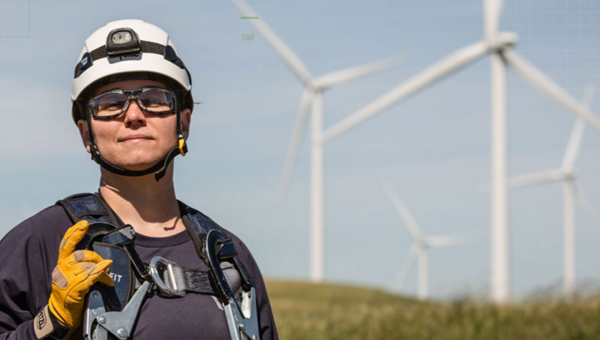
Utility-Scale Renewable Energy
Low-cost. Fast to deploy. Built to scale. Our solar and wind projects provide dependable energy and lasting cost stability.
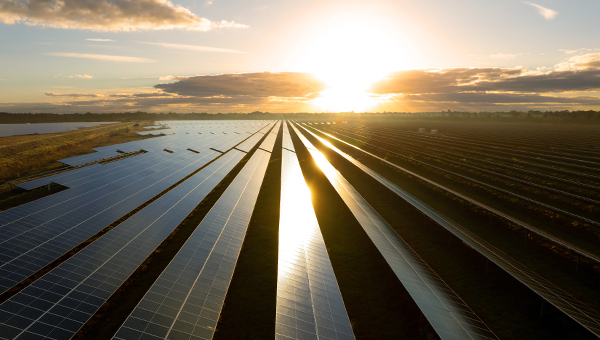
American Energy Available Now
As energy demand accelerates across the U.S., renewables are ready to deliver. Today’s utility-scale renewable energy solutions offer the fastest, most cost-effective path to new generation—meeting immediate power needs while advancing long-term energy goals. NextEra Energy Resources provides large-scale solar and wind solutions that help utilities, public power and commercial & industrial customers secure reliable, low-cost energy. Our utility scale renewables deliver dependable American-generated power, reduce exposure to price volatility and strengthen energy resilience.




Benefits of Utility-Scale Energy Projects
The benefits of NextEra Energy Resources’ utility-scale energy projects are clear, delivering reliable, low-cost power to meet America’s growing energy demand.
Fast, cost-effective deployment
Low-cost, utility-scale solar and wind projects can be developed and brought online quickly—delivering a proven, scalable solution to meet near-term power needs.
Power when it’s needed most
Solar and wind resources generate energy during peak hours, supplying reliable power when demand is at its highest.
Power without the upfront cost
All project costs—from development through long-term operations—are fully funded by NextEra Energy Resources, giving customers dependable energy without large capital commitments.
New capacity, real impact
Each project delivers true “additionality,” bringing new renewable generation to the grid and strengthening the nation’s overall energy supply.
Our Process

Site Evaluation

Permitting

Construction

Operations
Frequently Asked Questions
Utility-scale solar and wind projects are installations of equipment designed to generate electricity for the power grid or commercial entities. These projects typically range from several megawatts (MW) to hundreds or even thousands of MW. Electricity is sold through Power Purchase Agreements (PPAs) or directly into wholesale electricity markets.
Learn more about NextEra Energy Resources’ solar projects and their performance benefits in our detailed overview:
Utility-scale solar is one of the lowest-cost sources of new electricity available today. Key cost components include capital costs, Levelized Cost of Energy (LCOE) and operations and maintenance. Factors that influence cost include panel efficiency, land costs, labor rates, interconnection fees and financing terms.
A typical solar project requires five to eight acres of land for each megawatt of solar energy capacity.
If I have land and want you to assess its suitability for a renewable energy project, how do I get you to come out to look at it?
While not every parcel can be evaluated, property owners are welcome to contact us for more information.
While not every parcel can be evaluated, property owners are welcome to contact us for more information.
Reliability is at the core of NextEra Energy Resources’ operations. With decades of operational experience, industry-leading modeling and a diversified portfolio, the company provides customers with confidence in long-term performance. Detailed solar resource and irradiance data, paired with conservative performance assumptions, are used to forecast annual megawatt-hour (MWh) output and capacity factor with precision. We operate a dedicated operations control center to monitor and optimize the performance of our energy asset portfolio.
NextEra Energy Resources structures power purchase agreements (PPAs) to align with each customer’s resource planning, budget stability and regulatory requirements.
Our approach includes:
- Long-term value: PPAs typically span 15–25 years, providing cost stability and protection from fuel-price volatility.
- Competitive pricing: Vertically integrated capabilities and scale enable cost-competitive offers. As a diversified energy company, NextEra Energy Resources leverages efficiencies and consistent performance across its portfolio.
- Collaborative design: Contract terms are tailored to align with regulatory obligations (such as renewable portfolio standards), risk allocation (performance, curtailment, end-of-term) and future expansion opportunities (including solar-plus-storage or phased additions).
- Transparency and integration: Customers receive clear visibility into lifecycle costs—operations, maintenance, degradation, and replacement—and guidance on integrating projects into existing resource portfolios.
Ultimately, the goal is to provide reliable, low-cost energy that supports each customer’s long-term strategy—building relationships designed for lasting performance, not just a single transaction.
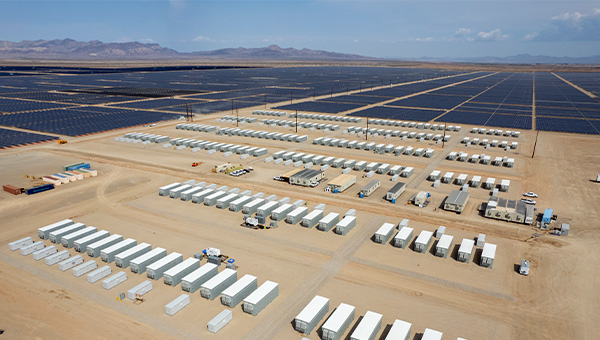
Optimize a Renewable Project with Battery Energy Storage
Battery energy storage systems transform how organizations manage power, capturing excess energy during low-demand periods and delivering it when it’s needed most.
*As of 6/30/2025