What is solar energy used for?
Once converted into electricity, solar energy is used in homes and businesses just like any other form of electricity.
What are some advantages of solar energy?
After the initial investment in solar-energy equipment, the costs are minimal since the sun provides free "fuel." These facilities are not affected by the supply and demand of fuel or subject to price volatility, and solar energy can help reduce America’s dependence on foreign sources of energy. Solar energy is also clean and renewable, which helps protect our environment.
How does solar energy work?
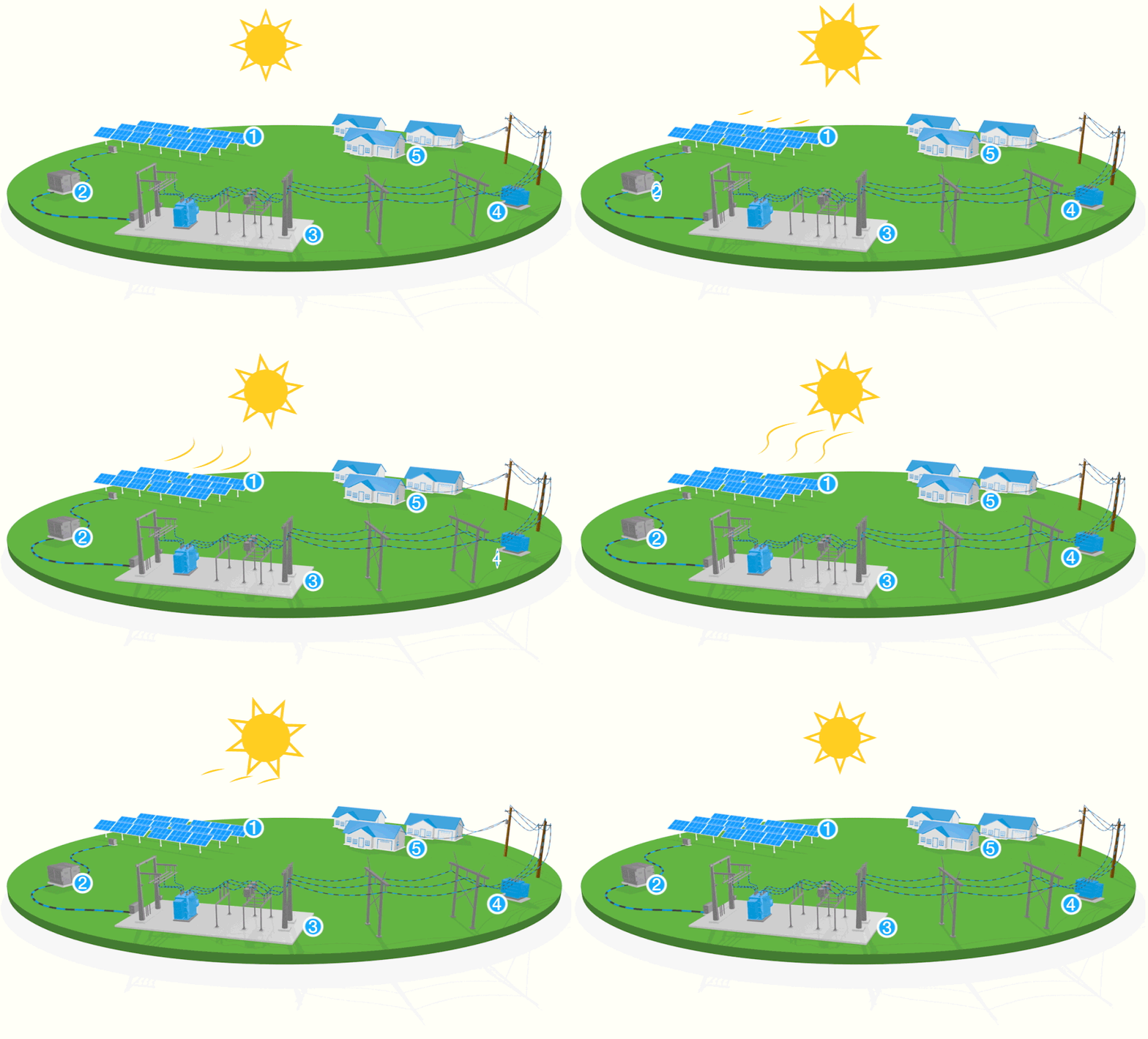
1. As light hits the solar panels, the solar energy is converted into direct current (DC) electricity.
2. The direct current flows from the panels into power inverters and is converted into alternating current (AC) electricity, which is suitable for use by homes and businesses.
3. The AC electricity from the power inverters is collected using cables and delivered to a central electrical substation, where it passes through a power transformer.
4. The electricity travels through transformers, and the voltage is boosted for delivery onto the transmission lines.
5. Clean, renewable, American-made solar electricity is delivered to homes and businesses.
How many solar facilities does your company have and where are they located?
Through its subsidiaries, NextEra Energy Resources is the world’s largest generator of renewable energy from the wind and the sun. We currently have ownership interests in approximately 7,800 MW of operating solar projects (as of Dec. 31, 2024), representing universal-scale solar facilities in 31 states, as well as multiple small-scale (distributed generation) solar projects.
Are solar facilities good for the environment?
Solar energy emits no pollutants and the overall impact of solar on human health is overwhelmingly positive. To learn more, view our solar environment page.
What percentage of generation does solar energy represent in the NextEra Energy Resources' portfolio?
Solar energy represents about 13 percent of NextEra Energy Resources' generation.
What do you look for in a site when building a renewable energy project?
We look for a location with good wind or solar resources, landowners who are interested in hosting our equipment and proximity to transmission lines.
If I have land and want you to assess its suitability for a renewable energy project, how do I get you to come out to look at it?
We cannot guarantee that we will assess every parcel of land presented to us. However, you can contact us for more information.
How much land does a solar project require?
Typically, a project will require 5 to 8 acres of land for each megawatt of solar energy capacity.
Is there construction traffic?
Yes. During construction there will be additional traffic. Although the construction period is only a matter of months, it will require heavy equipment, including bulldozers, graders, trenching machines, concrete trucks, flatbed trucks and large cranes.
How long will it take to complete construction?
It depends on the size of the project. However, 12 to 18 months is a reasonable time frame to build most solar projects.
How tall are the panels?
The panel arrays would stand approximately 10–13 feet above ground level at the highest point.
Will the project area be fenced?
The project’s commercial-scale solar arrays and collection substation will be enclosed by a fence.
Do solar energy projects make noise?
During the short construction period, noise at the project area would be typical of construction sites. Solar projects operate quietly during the operational period.
Can the equipment be damaged by weather?
The support systems for the solar arrays are designed to withstand the typical wind loading and snow loading present in this area. Photovoltaic (PV) panel manufacturers have tested and rated their equipment to withstand the impact of hailstones up to a certain size. Any panels that are damaged by hail or other debris can be individually replaced without taking the entire project out of service.
In the case of severe weather or natural disaster, if panels are damaged, trained facility personnel will safely collect, recycle where feasible and/or properly dispose of them.
Would the panels have glare?
Photovoltaic panels are constructed with nonreflective coatings and/or glass. These panels are designed specifically to absorb as much sunlight as possible in order to maximize electrical generation, rather than reflect sunlight. Through design and intelligent siting, glare can be eliminated or kept to a minimum. This is assessed in the project’s Article 10 application
Unlike the project on Route 30 in and out of town, High River will be providing vegetative screening with trees and shrubs to screen the solar project from many public viewpoints to the maximum extent practicable.
Are the solar panels the project plans to use safe?
Yes. People have been safely living and working around solar panels for decades. Solar panels create no greenhouse gases or other air pollutants. They use no water resources to generate electricity and they create no waste byproducts. Panels are made of solid materials and do not pose a chemical hazard to the general public, underlying soil or groundwater.
Who will pay for the removal of the system?
As part of the Article 10 requirements, High River Solar Project is required to file a decommissioning plan, which will include an obligation to provide financial security for the eventual removal of the system at the end of its life. The Town of Florida will be the beneficiary of the financial security. The project is obligated to return the land to substantially the same as it was before the solar project.
Will the project have an impact on ground water?
High River Solar Project will use safe solar panel technology that does not impact ground water. Furthermore, the project will not use pesticides. In limited instances, the project may selectively use herbicides approved by the New York State Department of Environmental Conservation as a secondary means of vegetation control if necessary. These state-approved products are typically used at farms or homes. Broadcast aerial application of herbicides is not proposed, only spot treatments.
Can solar panels leach chemicals into the ground if they become cracked?
The High River Solar Project will use crystalline silicon solar panels. These solar panels are made of solid materials and do not pose a chemical hazard to the general public, underlying soil or groundwater. In fact, people have been safely living and working around solar panels for decades. Solar energy emits no pollution and the overall impact of solar on human health is overwhelmingly positive. The project does not propose to use thin-film solar panels containing cadmium telluride.
Did the High River Solar Project conduct wind testing?
In accordance with the Building Code of New York State, wind loads will be determined in accordance with Chapters 26 to 30 of ASCE 7, set forth by the American Society of Civil Engineers. The wind speeds used for calculation of design wind loads on the solar panels, panel racking system and foundations will be determined from wind hazard map Figure 26.5-1C per Section 26.5.1 of ASCE 7-10 and regional climatic data per Section 26.5.3 of ASCE 7-10. The panels, therefore, will be securely fastened to support systems.