
Kilowatt-hour (kWh)
A unit of energy equal to one kilowatt (1 kW) of power used for one hour. It’s the standard measure for electricity consumption.
Megawatt (MW) and Megawatt-hour (MWh)
A unit of power equals one million watts (1,000,000 W). It is commonly used to measure the output of large power plants, wind turbines, solar farms, and other large-scale power generation equipment.
1 megawatt (MW) = 1,000 kilowatts (kW) = 1,000,000 watts (W).
A megawatt is a standard unit for describing energy scales in the electricity sector, such as the capacity of a small power plant or the energy consumption of a large industrial facility.
Gigawatt (GW)
A gigawatt is a unit of power equal to one billion watts (1,000,000,000 W). It is used to measure the capacity of major power plants, national energy grids, or large-scale industrial power consumption.
1 gigawatt (GW) = 1,000 megawatts (MW) = 1,000,000,000 watts (W).
Gigawatt is typically used for very large energy projects, such as the total installed capacity of a country’s wind or solar power, or the output of a major hydroelectric dam.
Utility-Scale Renewables
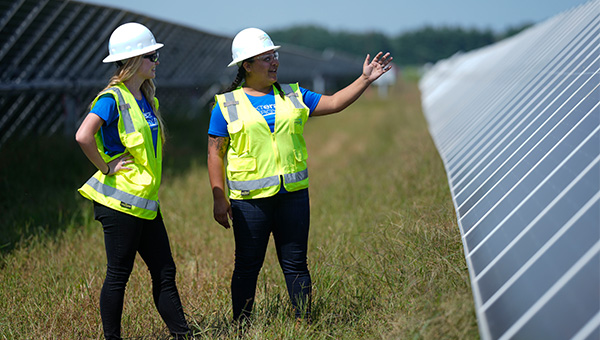
Utility-scale renewables, also referred to as grid Scale Renewables are large renewable energy projects—such as wind farms, solar parks, hydroelectric dams, and geothermal plants—designed to generate electricity at a magnitude sufficient to supply power directly to the electrical grid.
Renewable Power Purchase Agreement (RPPA)
An RPPA is a financial contract between a buyer (often a corporation or utility) and a renewable energy project developer. It is sometimes also referred to as a Virtual Power Purchase Agreement (VPPA). Under an RPPA, the energy generated by the renewable project (such as wind or solar) is delivered to the local grid, not directly to the buyer’s facility.
Battery energy storage systems (BESS)
A Battery Energy Storage System (BESS) is a technology that uses batteries to store electrical energy for later use. BESS can charge from the grid or renewable sources (like solar or wind) and then discharge that energy when needed—such as during peak demand, outages, or periods of high electricity prices.
Levelized Cost of Energy (LCOE)
The Levelized Cost of Energy (LCOE) is the average price of making electricity from a power plant over its entire life. It’s found by adding up all the costs—like building the plant, buying fuel, running it, fixing it, and taking it apart when it’s done—and dividing that by the total amount of electricity the plant produces. LCOE helps people compare how affordable different energy sources are, like solar, wind, and natural gas, in a fair way.
Load Shape
Load shape refers to the time pattern of electricity use by a customer, group of customers, or an entire utility system. It describes how the level of energy use varies over specific periods—such as hours, days, months, or years—and is typically illustrated as a curve plotting electricity demand (in megawatts or kilowatts) against time.
Base load
Base Load refers to the minimum level of demand on an electrical grid over a period of time. It is the consistent, continuous amount of electricity required by consumers, regardless of fluctuations in usage throughout the day or year.
Energy Capacity
Energy capacity refers to the maximum amount of electrical power that a generation facility, energy storage system, or transmission infrastructure can produce, store, or deliver at any given moment. It is typically measured in units such as kilowatts (kW), megawatts (MW), or gigawatts (GW).
Generation Capacity
The highest output a power plant or renewable energy installation can produce under specific conditions.
Storage Capacity
The total amount of energy that a battery or other storage system can hold and discharge when needed.
Transmission Capacity
The maximum amount of electricity that can be safely transmitted over power lines or through substations.