
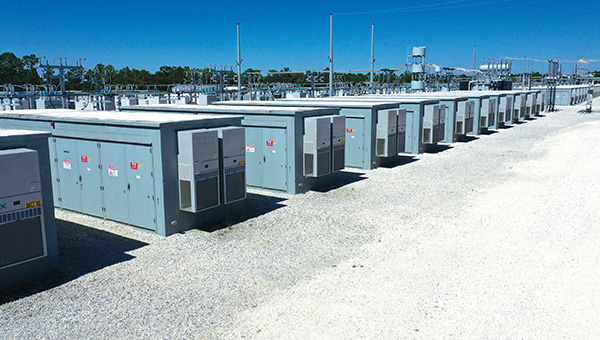
The Economics of Battery Energy Storage Systems: What Power Utilities Need to Know
Power demand in the United States is growing at an unprecedented pace, and utilities face the complex challenge of meeting the demand while maintaining grid reliability and controlling costs. As existing generation resources strain under higher load requirements, battery energy storage systems (BESS) offer an essential and cost-effective solution.
By investing in BESS and developing a strategic deployment plan, power utilities like yours can meet the energy needs of their customers and deliver reliable and affordable power, while maximizing economic value across their entire generation portfolio.
How Battery Energy Storage Systems Benefit Your Bottom Line
Immediate Cost Reduction Through Peak Shaving
The most visible economic benefit of battery energy storage lies in peak demand management. During high-demand periods, stored energy can be discharged at a fraction of the cost of firing up natural gas peakers, with the potential to save significantly during critical hours.
Risk Mitigation in Volatile Energy Markets
Battery energy storage systems act as a hedge against market volatility and grid instability. The ability to respond quickly to sudden generation outages or transmission constraints prevents costly emergency purchases and reduces exposure to price spikes during system stress events.
Maximizing Energy Asset Investment
Battery energy storage systems transform intermittent renewable resources into dispatchable, reliable power sources. This capability unlocks the full economic value of fast to deploy renewable investments by enabling energy delivery when it's most valuable, not just when it's available.
Providing Cost-Efficient Capacity
One important long-term economic case for battery energy storage lies in capacity value. As power demand surges, new generation capacity becomes increasingly expensive and time-sensitive to develop. Battery energy storage can provide firm capacity faster and often more cost-effectively than traditional generation resources.
Smarter Load Integration and Asset Optimization
Adding low-cost and fast-to-deploy renewables and battery energy storage to an existing generation mix can make it possible for your utility to integrate new loads while protecting general rates from the costs of systemic growth. By strategically integrating new renewable assets and battery energy storage systems to serve new loads, power utilities can maximize the load factor of an existing asset base, both by serving the new load and charging the batteries during non-peak times. This approach can help reduce a power utility’s levelized cost of energy and demonstrates the value of adopting an “all forms of energy” generation strategy in pursuit of balancing growth with the delivery of reliable, affordable electricity.
Building Smarter Energy Portfolios
The most successful energy strategies don't rely on any single technology—they integrate multiple resources to create resilient and cost-effective power portfolios. Battery energy storage systems play an integral part in any forward-thinking energy strategy: they enhance the value of renewable energy while providing the flexibility to optimize generation resources like natural gas and nuclear power.
This “all forms of energy” approach isn't just about diversification—it's about optimization. The right combination of resources, properly coordinated, can deliver lower costs, higher reliability and greater operational flexibility than any single solution.
Ready to unlock the economic benefits of battery energy storage for your organization? At NextEra Energy Resources, we bring deep market expertise and proven project delivery to help you navigate the complex economics of modern energy portfolios. Contact our team to explore how battery energy storage can enhance your energy portfolio.
Tags: Insights | Battery Energy Storage | Energy Storage | Power Demand | Utilities